Facelift in Albania | Hygeia Hospital
What is a Facelift?
The natural ageing process, combined with sun exposure, stress, and gravity, gradually alters facial appearance. Over time, skin loses elasticity, muscles weaken, and deep creases form. The face and neck contours soften, leading to sagging skin and jowl development.
A facelift addresses these visible signs of ageing by tightening underlying facial muscles, repositioning sagging tissues, and removing excess skin. The procedure softens deep lines around the nose and mouth while refining the jawline. One of the most common concerns is lower face laxity causing jowls to form.
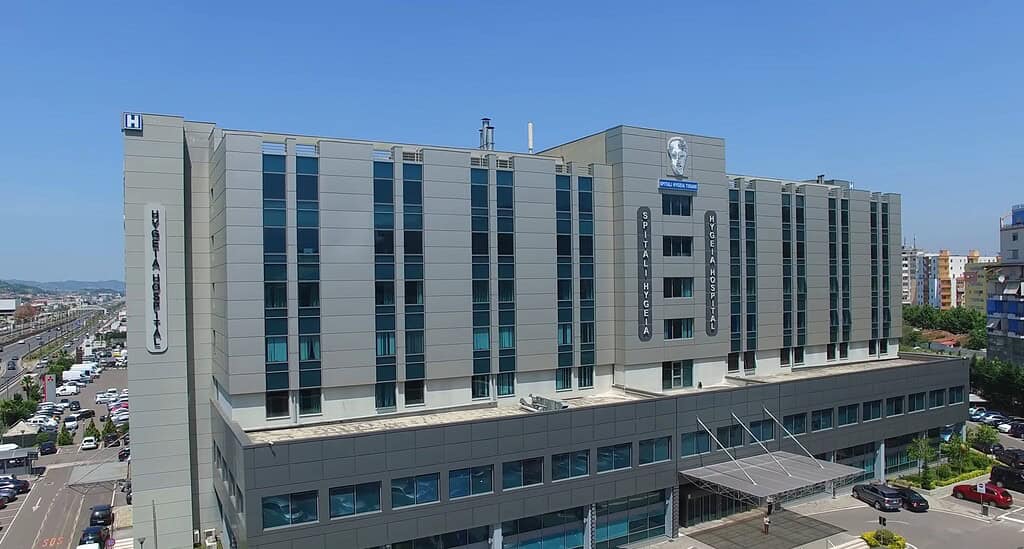
At Hygeia Plastic Surgery in Tirana, our board-certified surgeons perform advanced facelift procedures for patients across Europe seeking expert surgical skill at costs 55-65% lower than their home countries. We specialize in both full facelifts and neck lifts, deep plane techniques, and mini facelifts customized to individual ageing patterns.
The neck often reveals ageing as prominently as the face, with loose skin, excess fat, and vertical bands becoming noticeable. A neck lift specifically targets these concerns by removing excess fat, tightening the platysma muscles, and smoothing sagging skin. This creates more defined transition between jaw and neck.
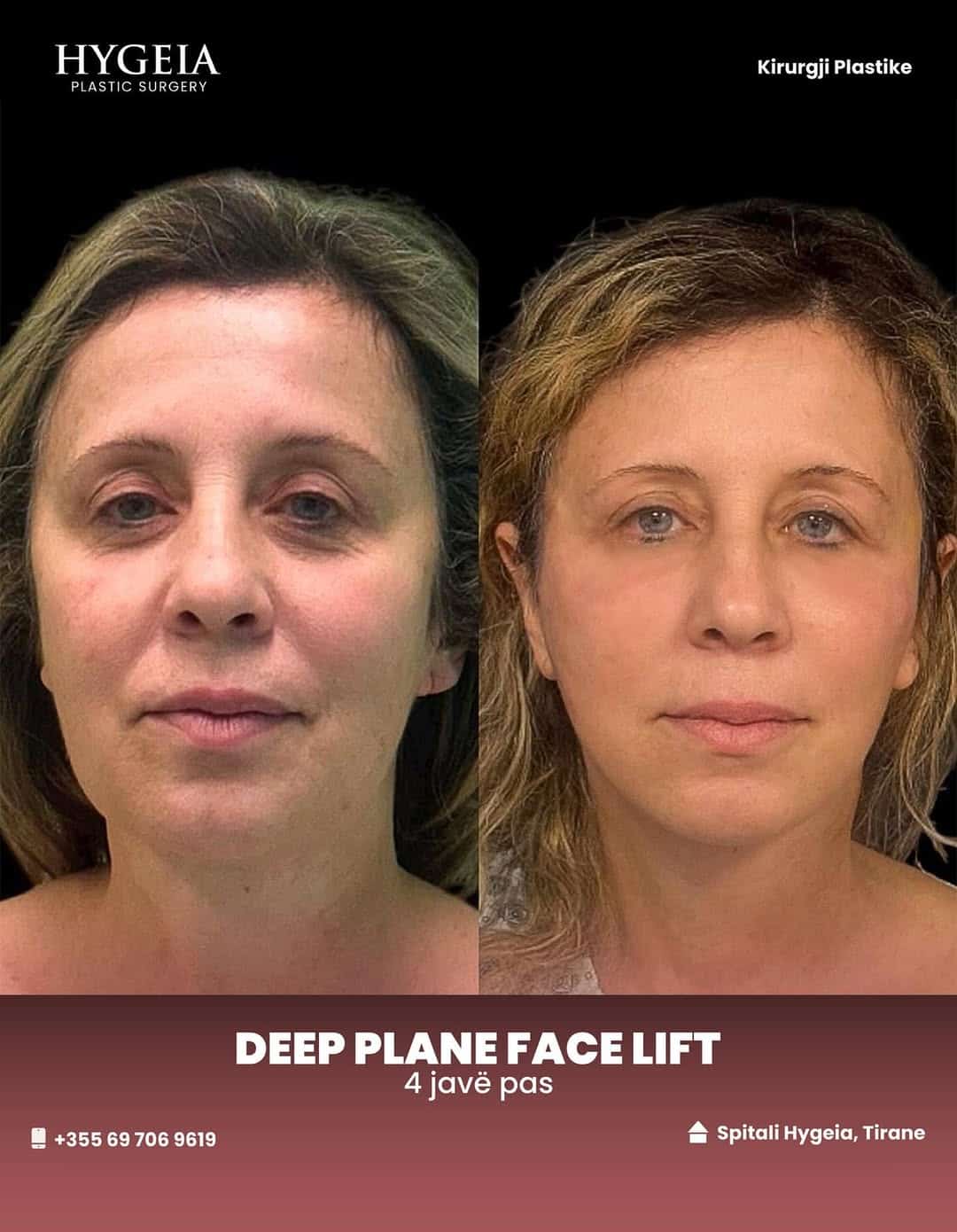
Before and After Facelift in Albania


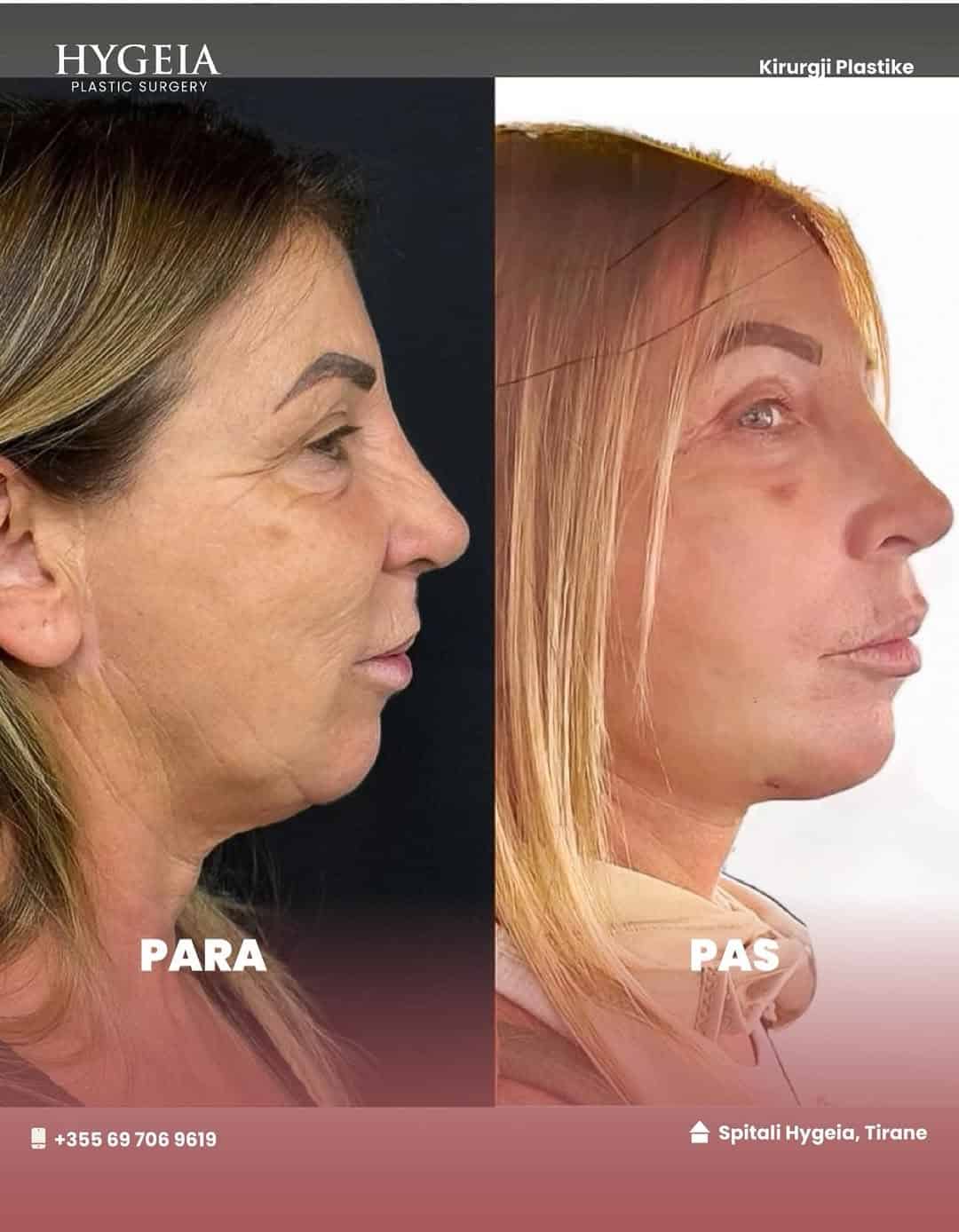
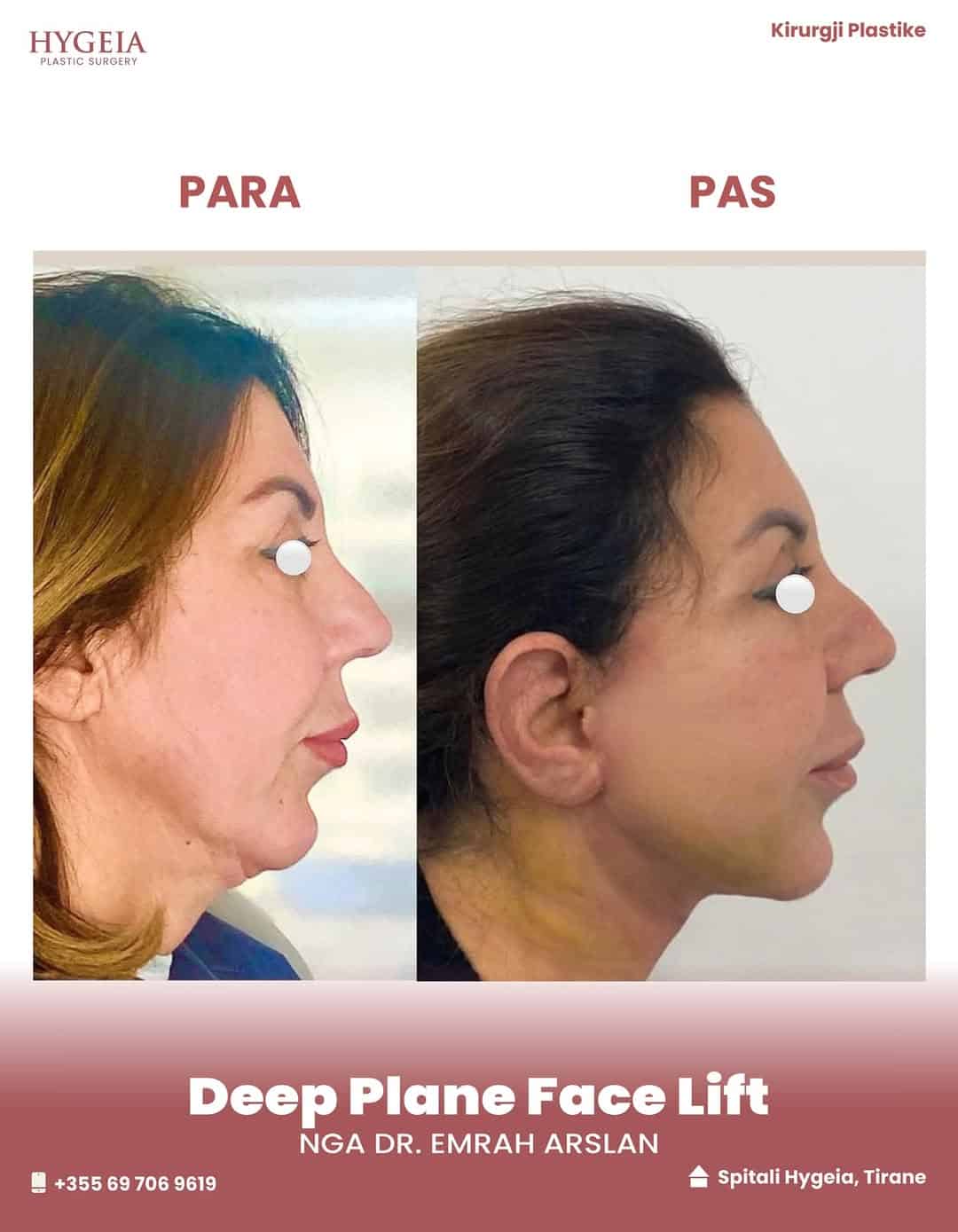
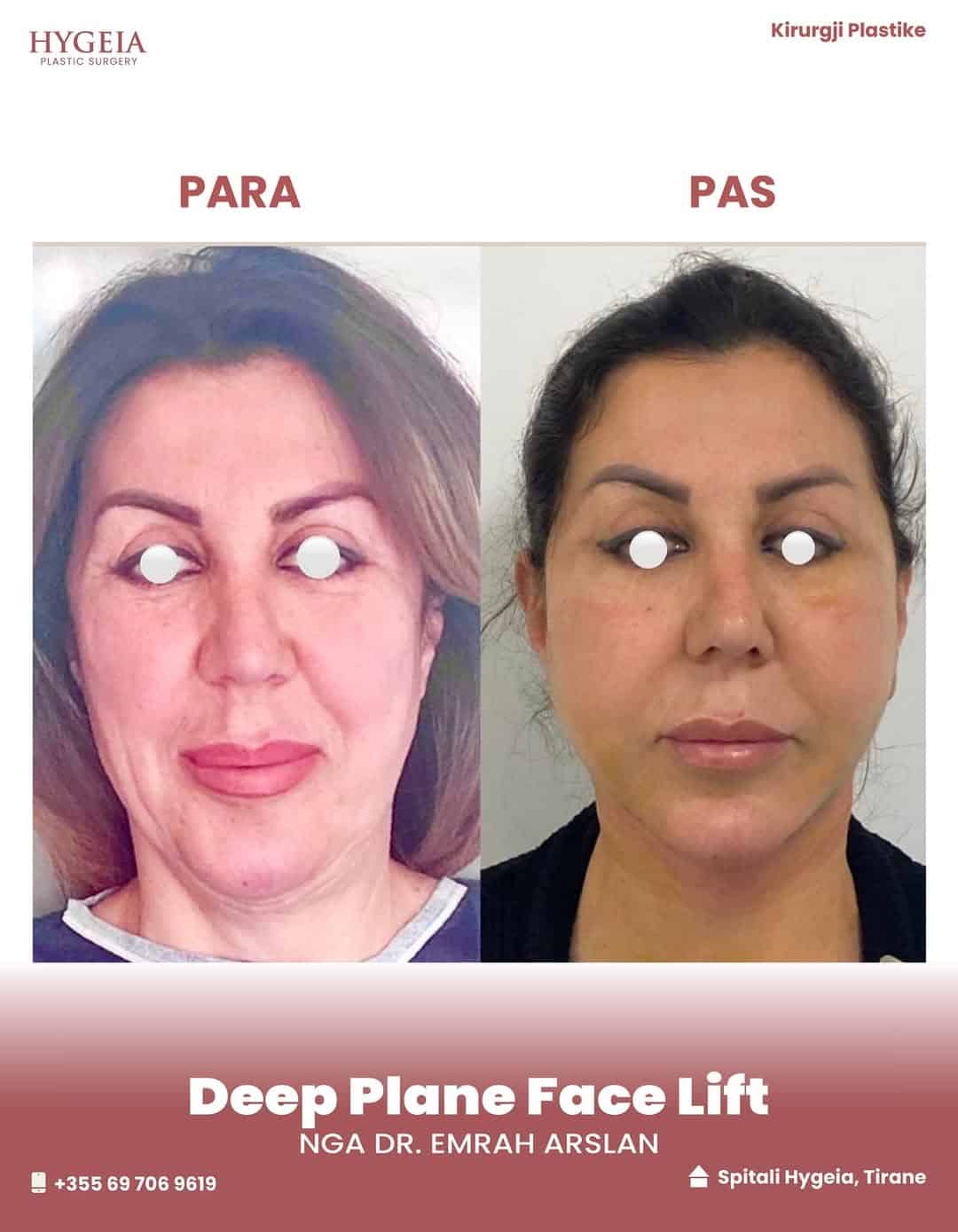
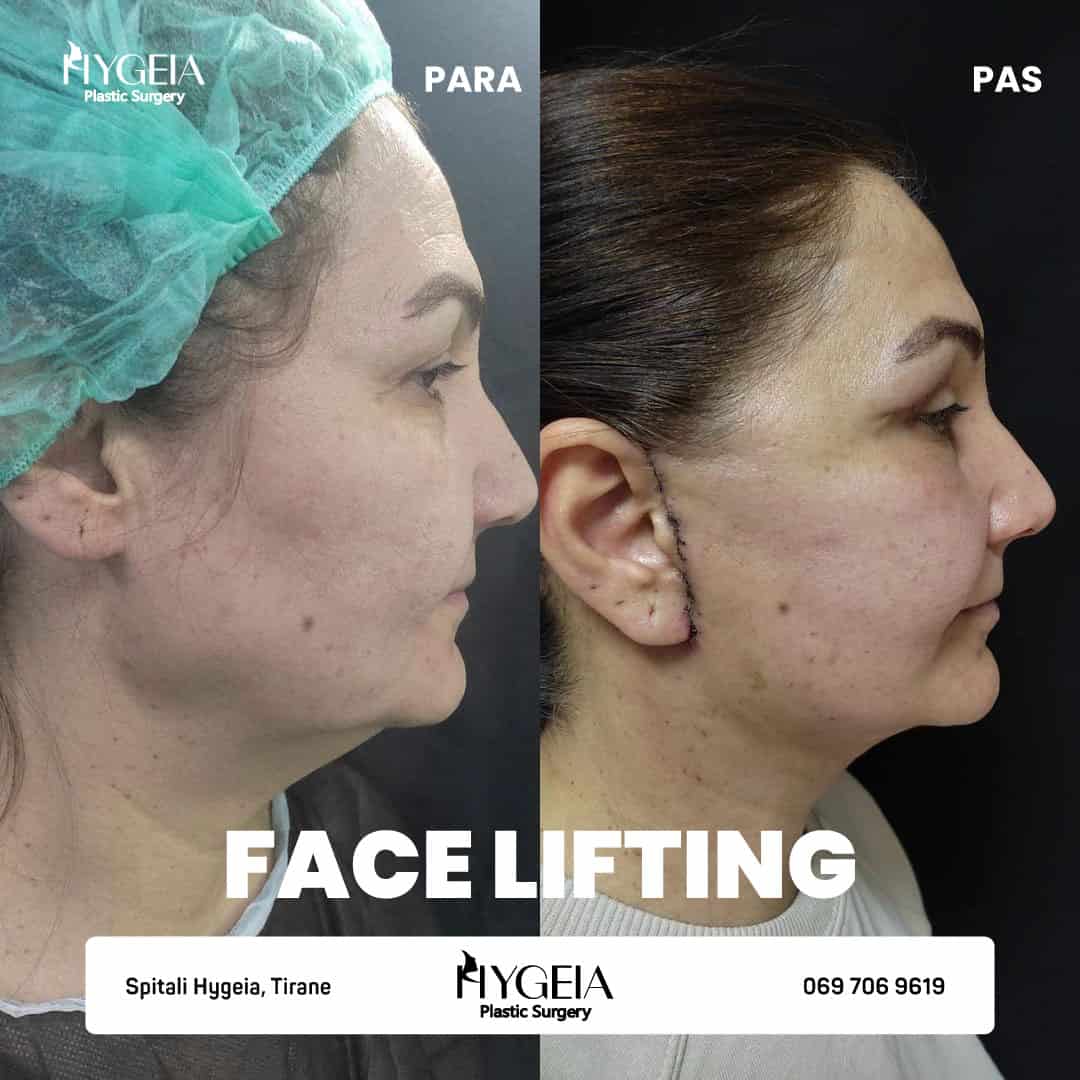


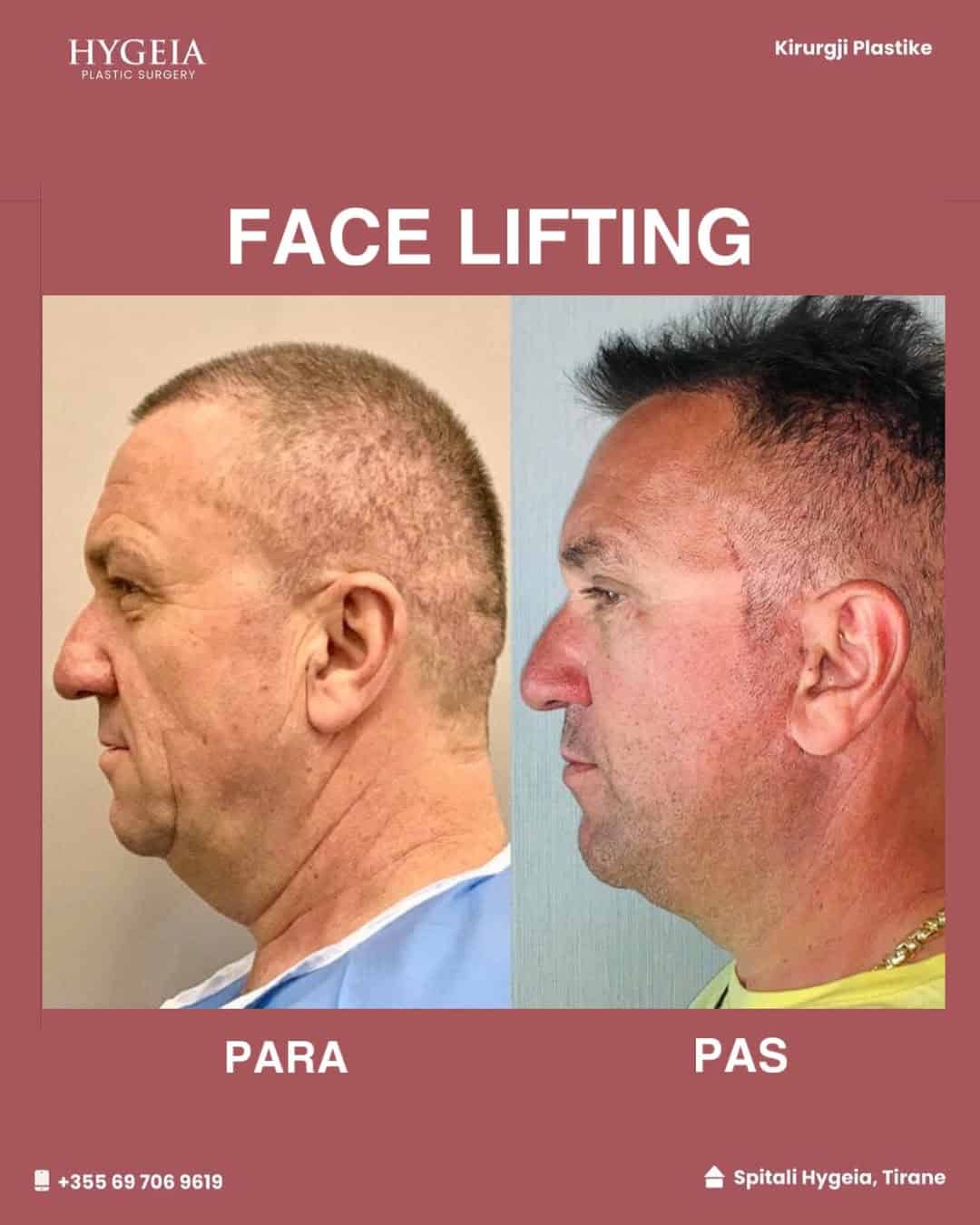
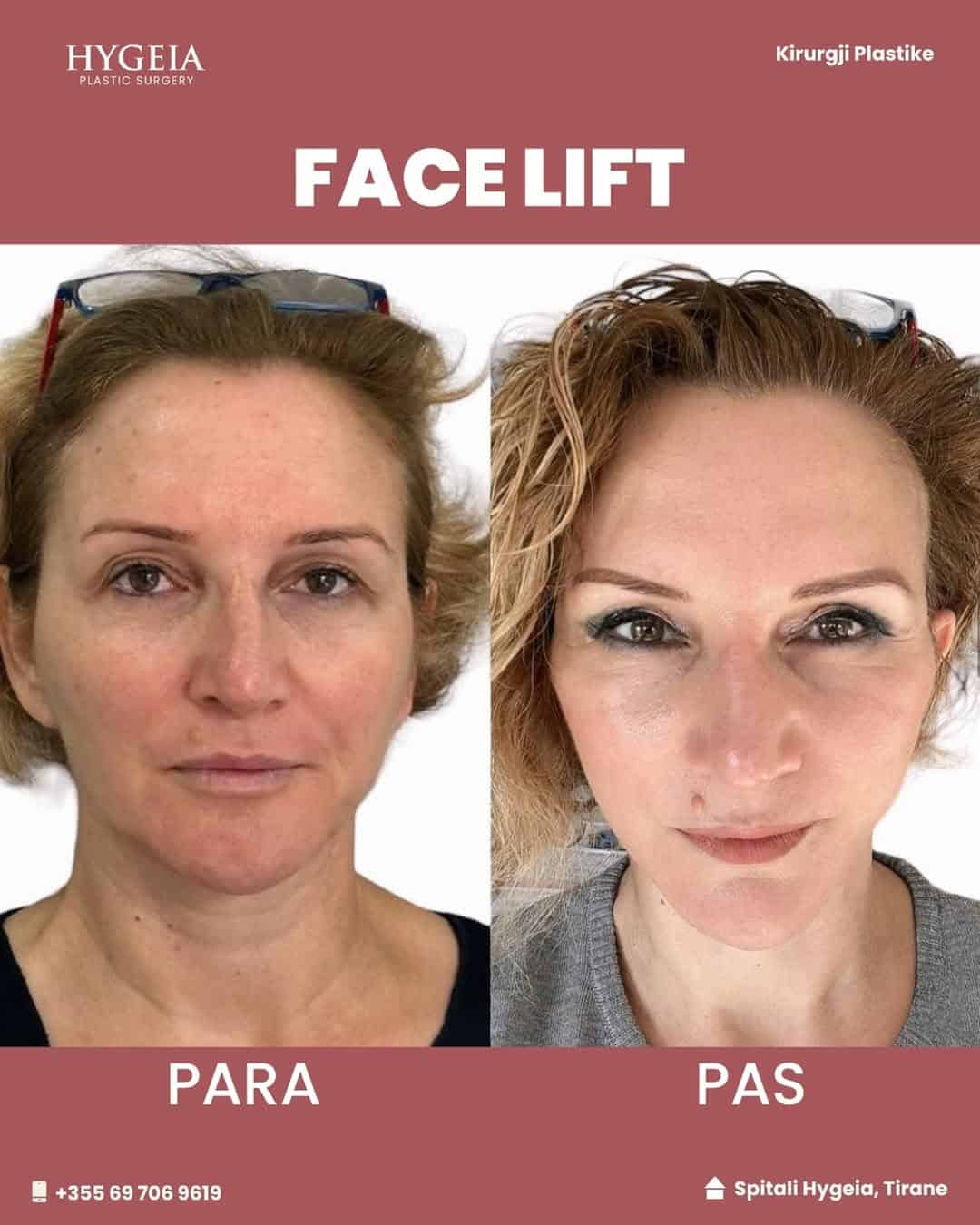
Reviewing before-and-after photos during consultation helps you understand realistic results achievable for your specific anatomy and assess whether our surgical aesthetic aligns with your preferences. All photos are of actual Hygeia patients who provided written consent for educational use.
What is Involved in a Facelift?
Facelift procedures at Hygeia are performed under general anaesthesia and take 2-5 hours depending on complexity. Our experienced anaesthesiologists ensure your comfort and safety throughout the procedure.
Surgical steps include:
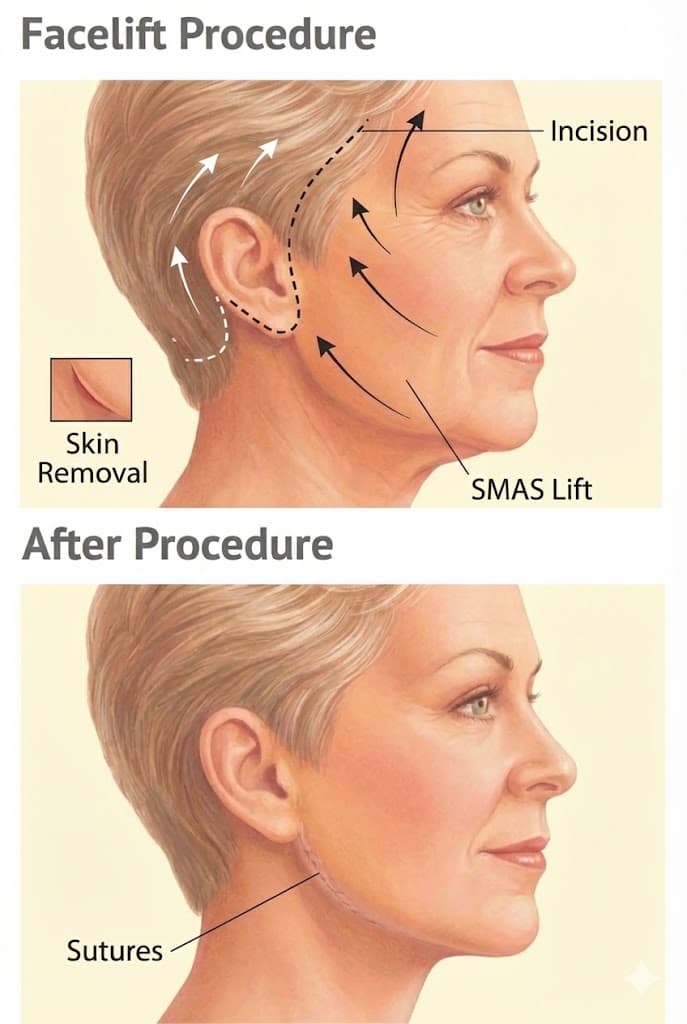
Incisions are made in the hairline at the temples, extending around the ear and ending in the lower scalp. Our surgeons position incisions strategically to minimize visible scarring, concealing them within natural skin folds and hairline.
The surgeon lifts and repositions deeper facial layers including the SMAS (superficial musculoaponeurotic system) and platysma muscles in the neck. This deep tissue work creates more natural, longer-lasting results than skin-only tightening.
Excess skin is carefully removed and remaining skin is redraped smoothly over rejuvenated facial structures. The incisions are closed with fine sutures, skin adhesives, or surgical tape to promote optimal healing.
Most patients stay overnight in our hospital for observation and comfort before transferring to nearby accommodation for recovery monitoring.

The Best Candidates For Facelift…
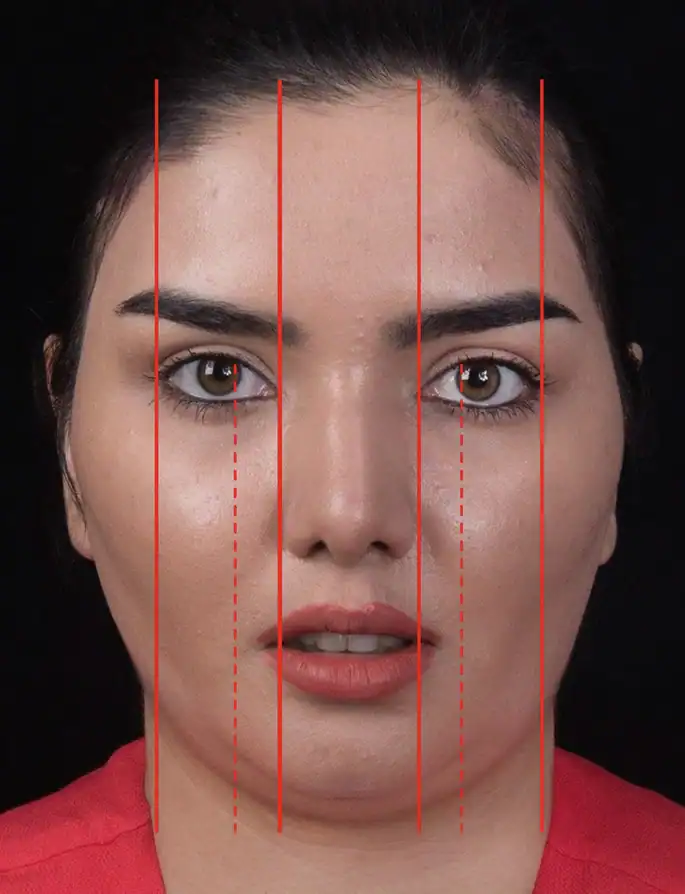
Complete a Quick Face Assessment
Not sure which facelift procedure suits your needs? Our online facial assessment helps identify your specific ageing concerns and appropriate surgical options.
Answer 8 simple questions about facial sagging, jowls, neck concerns, wrinkle depth, previous facial surgery, and aesthetic goals. Upon completion, receive a detailed email outlining which techniques might benefit you, approximate facelift cost in Albania for your case, and invitation to schedule video consultation with our board-certified surgeons.
This free assessment helps you understand facelift options before consultation, making your eventual surgeon meeting more focused and productive. Contact our coordinators or start your assessment through our website.
Facelift At a Glance
| Surgery Time | 2-5 hours |
| Time Off Work | 2-3 weeks |
| Hospital Stay | 1 night |
| Albania Stay | 10-14 days recommended |
| Shower | After 1 week |
| Reasonable Mobility | After 2 days |
| Exercise | Light after 4 weeks, full after 6 weeks |
| Sexual Activity | After 4 weeks |
| Sleeping Position | Elevated for 4 weeks |
| Full Recovery | 6-8 weeks for major swelling |
| Driving | After 2 weeks |
| Final Results | 3-6 months |
| Results Longevity | 10-15 years |
What Are the Facelift Options in Albania?
Depending on your concerns and desired outcomes, several facelift techniques are available at Hygeia. During consultation, your surgeon discusses different approaches to determine which option best suits your needs.
Full Facelift (Traditional Rhytidectomy)
The most comprehensive rejuvenation designed for patients wishing to address moderate to advanced ageing concerns. A full facelift targets the entire face and neck, including mid-face, lower face, jowls, and neck. This addresses sagging cheeks, deep nasolabial folds, marionette lines, jowls, and neck laxity simultaneously.
Full facelifts provide the most dramatic and longest-lasting results, typically maintaining improvement for 10-15 years. This technique is ideal for patients in their 50s, 60s, and beyond experiencing significant facial ageing.
Deep Plane Facelift
The most advanced facelift technique, working beneath the SMAS layer directly on facial muscles. Deep plane facelifts address the deepest structural changes including severe nasolabial folds and significant mid-face descent.
This technique provides superior, natural-looking results with less tension on skin, promoting better healing and longevity. Deep plane facelifts require exceptional surgical expertise and take longer to perform due to meticulous, precise dissection.
Our surgeons trained extensively in deep plane techniques at leading European centers, bringing specialized skills to complex cases requiring comprehensive rejuvenation.
SMAS Facelift
SMAS facelift involves tightening both skin and underlying SMAS layer for robust, long-lasting results. The platysma muscle in the neck is also tightened to restore youthful contours in the lower face and neck.
After reconstructing deeper tissues with precise suture placement, the skin layer is lifted, tightened, and excess removed. SMAS facelifts have less tension on incisions than skin-only procedures, resulting in better-quality scars.
When performed by experienced surgeons, SMAS facelifts can last 10 years or more, making them excellent value for comprehensive facial rejuvenation.
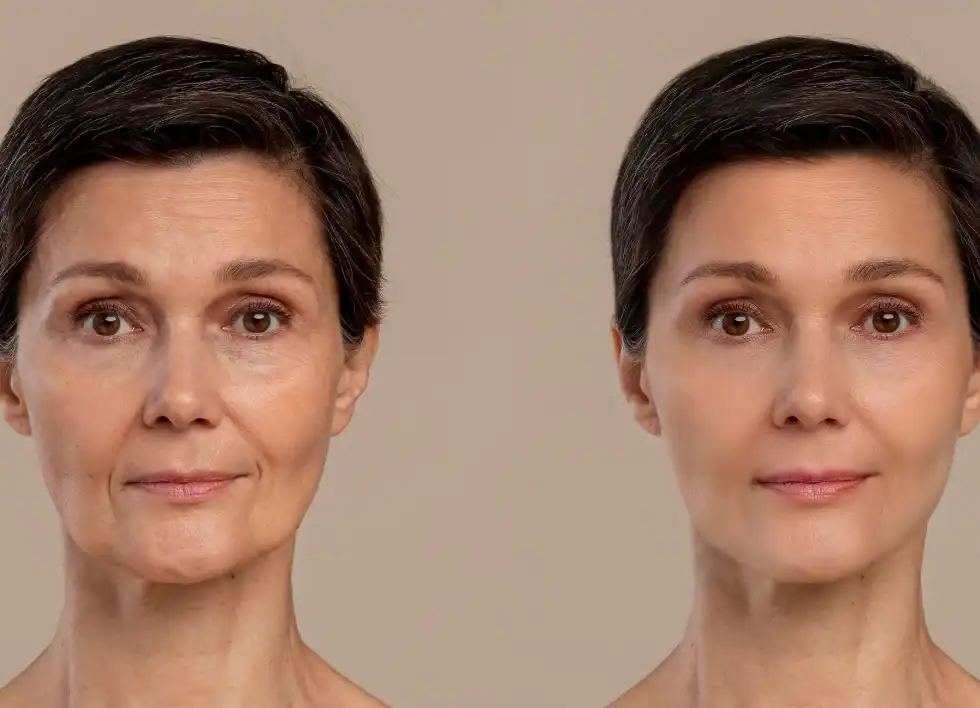
Mini Facelift
A less invasive approach targeting mild to moderate lower face ageing. Mini facelifts are suitable for patients in their 40s to early 50s with early jowl formation and jawline softening but limited neck ageing.
The procedure uses shorter incisions primarily in front of the ears without extending extensively into the hairline. Recovery is faster than full facelifts, with many patients returning to work within 10-14 days.
Mini facelifts provide natural-looking improvement for patients not yet requiring comprehensive facial rejuvenation but wanting to address specific concerns before they advance.
Mid Facelift
Focuses on the central facial area including cheeks, under-eyes, and nasolabial folds. Mid facelifts address sagging cheeks and deepening lines from nose to mouth without affecting the lower face or neck.
This procedure is frequently combined with eyelid surgery (blepharoplasty) and fat grafting for comprehensive upper and mid-face rejuvenation. Standalone mid facelifts are less common but appropriate for patients with localized mid-face ageing.
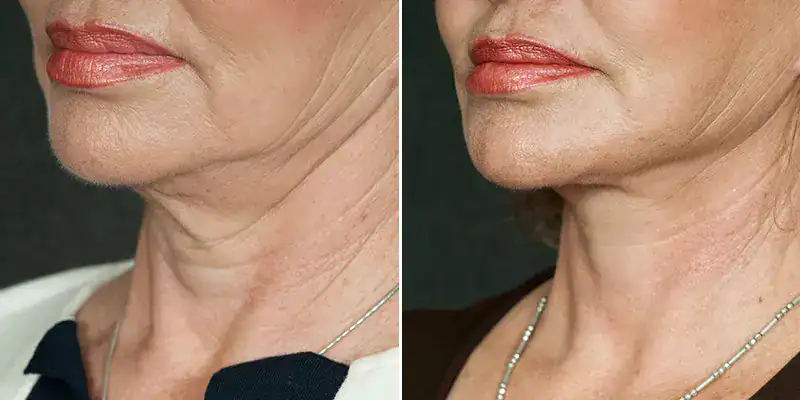
Neck Lift
Addresses ageing specifically in the neck including loose skin, excess fat, vertical platysma bands, and loss of jawline definition. Can be performed alone or combined with facelift for comprehensive lower face and neck rejuvenation.
Small incisions are made under the chin and around the ears. The platysma muscle is tightened and excess fat removed through direct excision or liposuction, creating smoother, more defined neck contours.
Endoscopic Facelift
Uses advanced endoscopic technology with small camera inserted under skin, allowing detailed access to treatment areas through minimal incisions. This reduces visible scarring while providing precise surgical control.
Endoscopic techniques are particularly effective for brow lifts and mid-face work, offering faster recovery and less tissue trauma than traditional approaches.
The Cost of a Facelift in Albania
Facelift surgery in Albania starts from €4,000 depending on technique and complexity. This represents 55-65% savings compared to Western Europe while maintaining identical surgical expertise and European safety standards.
Facelift pricing at Hygeia:
- Mini facelift: Starting from €4,000
- SMAS facelift: Starting from €5,000
- Full facelift: Starting from €5,500
- Deep plane facelift: Starting from €6,500
- Neck lift (standalone): Starting from €3,200
- Combined facelift with neck lift: Starting from €6,000
Compare Western Europe costs:
- UK: €10,000-18,000 (60-65% more expensive)
- Germany: €12,000-20,000 (65-70% more expensive)
- Switzerland: €15,000-25,000 (70-75% more expensive)
- Italy: €9,000-16,000 (55-60% more expensive)
Even accounting for international travel—flights €100-400 return from most European cities, accommodation €40-80 per night for 10-14 days (€400-1,120)—your total investment remains substantially lower while receiving world-class surgical care.
What’s included in our transparent pricing: Surgeon’s professional fee, anaesthesiologist’s fee, modern hospital facility costs including overnight stay, all surgical supplies and equipment, post-operative medications during hospital stay, compression garments and dressings, scheduled follow-up appointments during your Albania stay, detailed aftercare instructions, and 24-hour emergency contact support.
Additional costs to budget: Accommodation (€400-1,120 for typical 10-14 day stays), flights (€100-400 return depending on departure city), local transportation for appointments (minimal—we provide transfers), and meals during recovery (significantly more affordable than Western Europe).
Medical tourism packages: Our international patient coordinators arrange complete packages including pre-negotiated hotel rates near our hospital, airport transfers, local transportation for all appointments, and assistance with any logistical needs. These comprehensive packages simplify planning and ensure smooth surgical journeys.
Finance options available: Payment plans through medical finance providers allow spreading facelift costs over 12-48 months rather than paying upfront. Contact our coordinators for specific financing options and detailed personalized quotes.
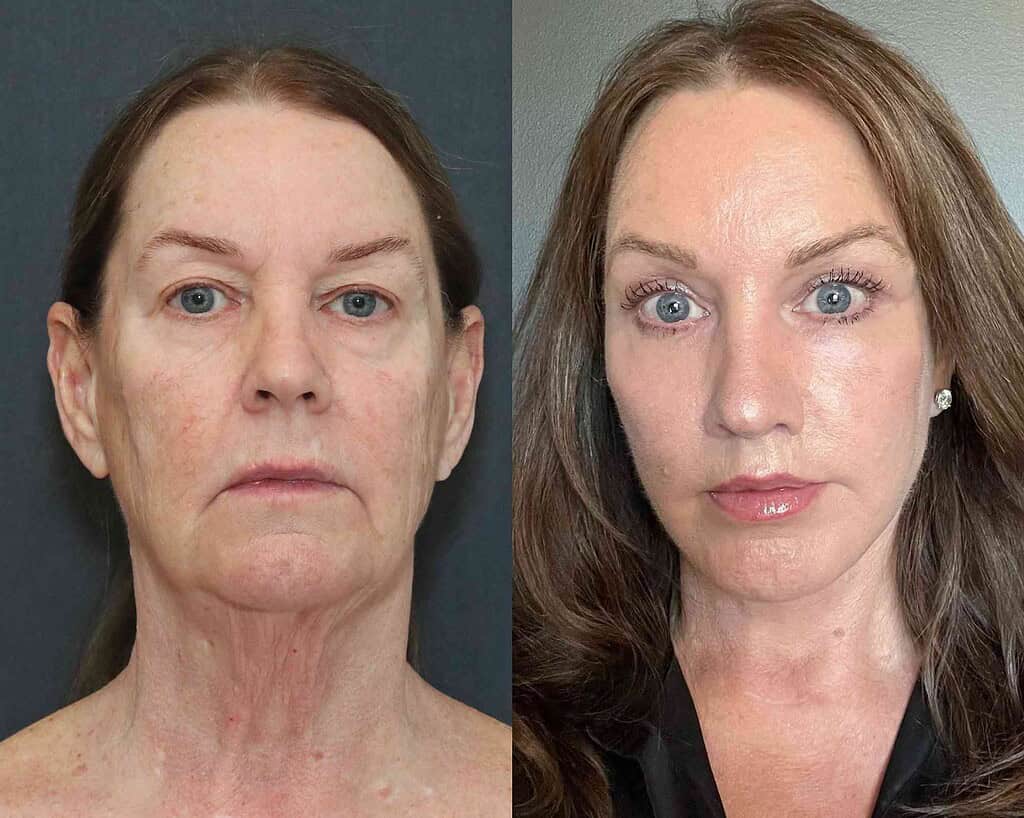
What are the Benefits of a Facelift?
Comprehensive Facial Rejuvenation
A facelift addresses multiple ageing concerns simultaneously rather than isolated problems. This creates harmonious overall improvement—smoother skin, lifted contours, defined jawline, and rejuvenated neck working together for naturally youthful appearance.
Improved Appearance of Wrinkles and Fine Lines
The procedure smooths deep wrinkles and fine lines, particularly around the mouth (nasolabial folds and marionette lines), nose, and jawline. These visible signs of ageing are significantly reduced through tissue repositioning and skin tightening.
Tightened and Firmer Skin
Facelift surgery tightens and firms facial skin by addressing underlying muscle laxity and removing excess tissue. This creates more defined facial contours and restores youthful skin tension without appearing pulled or artificial.
Enhanced Jawline and Neck Definition
One of the most dramatic improvements is restored jawline definition and smoother neck contours. Jowls are eliminated, creating clean transition from face to neck. The neck appears slimmer and more youthful with tightened platysma muscles and excess fat removal.
Long-lasting Results
Facelift results are exceptionally durable, lasting 10-15 years when performed using modern deep tissue techniques. This longevity makes facelifts excellent value compared to temporary non-surgical treatments requiring frequent repetition. The effects persist far longer than injectable fillers or thread lifts.
Increased Self-confidence
Many patients report dramatically increased self-confidence following facelift surgery. Looking refreshed and youthful often translates to feeling more energetic, confident in social situations, and comfortable in photographs. The psychological benefits of looking as vibrant as you feel are substantial.
Natural-looking Enhancement
Modern facelift techniques emphasize natural results that enhance your inherent features rather than creating obvious surgical appearance. Skilled surgeons create subtle improvements that restore youthful contours without the “windswept” or overdone look associated with outdated methods.
Why Do People Have a Facelift in Albania?
Jowl Correction and Jawline Definition
Jowls—sagging skin along the lower jaw—are among the most common complaints prompting facelift consideration. They create a heavy, aged appearance and blur the once-defined jawline. Facelifts eliminate jowls by lifting descended facial fat pads and tightening underlying muscles, restoring clean, youthful jaw contours.
Sagging Cheeks and Mid-face Descent
As facial fat pads descend with age, cheeks flatten and nasolabial folds (lines from nose to mouth corners) deepen. This mid-face descent creates a tired, aged appearance. Facelifts reposition these structures to their youthful position, restoring cheek volume and smoothing deep folds.
Neck Ageing and Loss of Neck Definition
The neck often reveals age as prominently as the face. Loose skin, vertical platysma bands (“turkey neck”), and excess fat accumulation create undefined, aged neck appearance. Neck lifts address these concerns comprehensively, creating smooth, defined contours from jawline to collarbone.
Deep Nasolabial Folds and Marionette Lines
Deep creases running from nose to mouth corners (nasolabial folds) and from mouth corners downward (marionette lines) age the face significantly. While fillers provide temporary softening, facelift surgery addresses the underlying structural descent causing these lines, providing longer-lasting correction.
Overall Facial Rejuvenation
Many patients don’t have one specific concern but rather overall facial ageing affecting multiple areas. Comprehensive facelifts address this holistic ageing pattern, creating balanced, natural rejuvenation across the entire face and neck rather than isolated improvements.
Post-weight Loss Skin Laxity
Significant weight loss often leaves excess facial skin that won’t contract despite exercise or healthy living. Facelift surgery removes this redundant tissue, revealing the improved facial structure achieved through weight loss and creating harmonious contours matching your healthier body.
Restoring Pre-ageing Appearance
Many facelift patients remember how they looked 10-15 years ago and want to recapture that appearance. Modern facelifts can effectively “turn back the clock” by reversing many visible ageing changes, helping patients look like refreshed versions of their younger selves.
Who is Suitable for a Facelift?
Appropriate age: Facelift surgery is typically recommended for patients over 40, as this is when facial ageing signs become more pronounced. However, some patients in their late 30s with premature ageing or strong genetic predisposition may benefit from early intervention. Most facelift patients are between 50-70 years old.
Moderate to advanced facial ageing: Ideal candidates have visible facial sagging, jowls, deep nasolabial folds, neck laxity, or loss of jawline definition. Patients with minimal ageing may be better suited to less invasive options like mini facelifts or non-surgical treatments.
Good skin quality: While some skin laxity is expected, patients with reasonable skin elasticity and minimal sun damage achieve the best results. Severely sun-damaged or very thin skin may not contract optimally after lifting, though experienced surgeons can still create improvement.
Realistic expectations: Successful facelift patients understand what surgery can and cannot achieve. Facelifts dramatically improve facial contours and reduce ageing signs, but they don’t stop future ageing, create perfection, or change fundamental facial structure. Computer imaging during consultation helps visualize realistic outcomes.
Good overall health: Patients should be in good general health without conditions significantly impairing healing. Uncontrolled diabetes, significant cardiovascular disease, bleeding disorders, or immune problems require careful evaluation. Most healthy adults regardless of age can safely undergo facelift surgery with proper medical clearance.
Non-smoker status: Smoking severely impairs healing by constricting blood vessels and reducing oxygen delivery to tissues. This is particularly problematic in facelift surgery where skin blood supply is temporarily compromised. Patients must stop all tobacco and nicotine products at least 6 weeks before and 6 weeks after surgery. Failure to quit dramatically increases risks of skin necrosis, poor wound healing, infection, and unsatisfactory results.
Stable weight: Significant weight fluctuations affect facial appearance and surgical outcomes. Patients should be at stable weight for at least 6 months before facelift surgery. Major weight loss after surgery can cause renewed skin laxity, while significant weight gain can compromise results.
Commitment to recovery: Facelift recovery requires 10-14 days in Albania followed by 2-3 weeks restricted activity at home. Patients must commit to following post-operative instructions—sleeping elevated, avoiding strenuous activity, attending follow-ups, protecting incisions. Those unable to take adequate time off work or arrange assistance may want to delay surgery.
Emotional readiness: Beyond physical suitability, patients should feel emotionally ready for surgery. Some adjustment period is normal as you adapt to your rejuvenated appearance. Patients pursuing facelifts for themselves (not to please others) and with positive motivations achieve greater satisfaction.
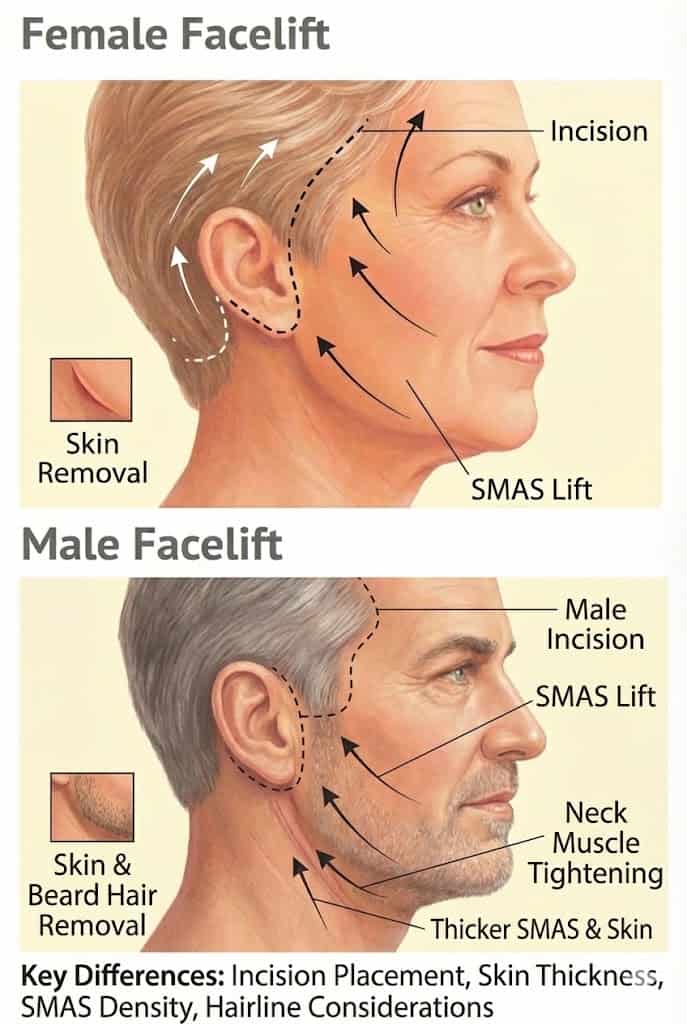
Differences in Male and Female Facelift
Male and female facelifts follow similar surgical principles but aim for gender-appropriate aesthetic outcomes reflecting natural anatomical differences and cultural beauty standards.
Male facelift characteristics: Men require preservation of masculine facial features during rejuvenation. This means maintaining stronger, more angular jawlines rather than creating overly refined contours. Facial hair patterns must be carefully considered—incisions should not disrupt beard distribution or create unnatural hair patterns.
Male facial anatomy differs significantly from female. Men typically have thicker skin, denser soft tissue coverage, stronger facial bones, and different fat distribution patterns. Blood supply differences mean male facelifts may have longer recovery with more pronounced swelling and bruising.
Incision placement requires particular attention in men. Scars must be concealed within natural contours while avoiding areas where beard growth would make them conspicuous. Behind-the-ear incisions are particularly important as men cannot use hairstyles to hide scars as effectively as women.
The aesthetic goal for male facelifts is creating refreshed, rested appearance without feminization. Over-tightened or overly smooth results appear unnatural on men. Maintaining appropriate facial angularity, defined jaw structure, and masculine proportions is essential.
Female facelift characteristics: Women often seek softer, more refined contours with smoother skin texture and gentle facial curves. The goal is restoring youthful femininity while maintaining individual character.
Female facial anatomy typically features thinner skin, more delicate underlying structures, and different fat distribution. Women often have more prominent mid-face ageing with nasolabial fold deepening, while men may show more lower face and neck changes.
Incision placement is more flexible in women as hairstyles can effectively conceal scars. Women typically accept longer recovery periods and are more comfortable with temporary swelling and bruising.
The aesthetic ideal for female facelifts emphasizes natural, harmonious rejuvenation that looks refreshed rather than “done.” Results should appear as if you’ve had restful vacation rather than obvious surgery.
Common principles: Regardless of gender, successful facelifts create results harmonizing with unique facial features, respecting ethnic background, and achieving age-appropriate refreshment appearing natural rather than obviously surgical. The goal is always looking like a rejuvenated version of yourself rather than a different person.
What to Expect: Your Facelift Journey
Initial Consultation
Your facelift journey begins with comprehensive consultation where your surgeon examines facial anatomy from multiple angles, assesses skin quality and elasticity, evaluates underlying muscle and fat structure, discusses specific concerns and aesthetic goals, reviews medical history and medications, explains which surgical techniques suit your case, shows before-and-after photos of similar cases, uses computer imaging to visualize potential outcomes, discusses realistic expectations and limitations, answers all questions, and provides detailed cost estimates.
For international patients, initial video consultations allow you to meet our team, discuss your case thoroughly, and receive preliminary recommendations before traveling to Albania. If proceeding, you’ll schedule surgery and plan your Albania visit. Our coordinators assist with flight bookings, accommodation recommendations, airport transfers, and all logistical details.
Pre-operative Preparation
In the weeks before surgery, stop medications increasing bleeding risk (aspirin, ibuprofen, certain supplements). Discontinue all tobacco and nicotine products at least 6 weeks before surgery—this is mandatory for safe healing. Arrange extended time off work (3-4 weeks minimum) and home assistance during recovery.
Complete any required pre-operative medical testing including blood work and possibly ECG depending on age and health status. Follow specific instructions about eating, drinking, and medications the night before and morning of surgery. Prepare recovery area at home with extra pillows for elevated sleeping, entertainment, and easy-access necessities.
Surgery Day
Surgery day begins with meeting your surgical team and anaesthesiologist who reviews your medical history and anesthesia plan. Your surgeon performs final marking and surgical planning, taking final photos and confirming the surgical approach. You proceed to the operating theatre where you receive general anaesthesia.
The surgeon performs your facelift over 2-5 hours depending on complexity. After surgery, you recover under nursing observation for several hours. Most patients stay overnight in our hospital for observation and comfort, ensuring any immediate post-operative concerns are addressed before transferring to accommodation.
Recovery Timeline
Days 1-3: Significant swelling and bruising begin developing, typically peaking around day 2-3. Pain is generally well-managed with oral medication—most describe pressure and tightness rather than severe pain. Head must remain elevated even while sleeping. Gentle walking is encouraged to promote circulation. Compression garments or bandages remain in place.
Days 4-7: Swelling begins gradually improving though still prominent. Initial dressings removed and incisions assessed. Gentle hair washing may be permitted. You’ll see your new facial contours emerging though substantial swelling persists making appearance fuller than final results.
Week 2: Most sutures removed during this week. Swelling and bruising continue improving though still visible. Many patients feel comfortable with light makeup application to conceal remaining discoloration. Gentle activities permitted but avoid anything elevating heart rate significantly.
Weeks 3-4: Major swelling substantially resolved though subtle puffiness persists. Most patients return to desk work during this period. Social activities resume as confidence in appearance improves. Light exercise like walking permitted. Incisions continue healing and fading.
Weeks 4-8: Appearance continues improving as residual swelling gradually resolves. Facial contours become more refined. Moderate exercise permitted after week 6. Most restrictions lifted though you should still protect face from trauma and avoid contact sports.
Months 3-6: Final refinement occurs as last traces of swelling disappear and tissues settle completely into their new position. Scars continue fading and flattening. True final results emerge around 3-6 months post-surgery. Most patients thrilled with refreshed appearance by this point.
Follow-up Care
Scheduled appointments during your Albania stay allow your surgeon to monitor healing, remove sutures, assess results, answer questions, and provide guidance for continued recovery. After returning home, you maintain contact through photos and email updates.
Most patients don’t require in-person follow-up beyond the initial 2 weeks unless concerns arise, as healing progresses predictably following detailed written instructions provided. However, we remain available for support and guidance throughout your recovery journey.
What are the Risks of a Facelift?
Bleeding: Minor oozing from incisions for 24-48 hours is normal. Significant bleeding requiring intervention is rare but may necessitate return to operating theatre for exploration and cauterization of bleeding vessels. Stopping all blood-thinning medications before surgery minimizes this risk.
Infection: Uncommon due to prophylactic antibiotics and meticulous surgical technique. If infection occurs, antibiotics typically resolve it quickly. Severe infections requiring additional intervention are rare. Following post-operative care instructions and keeping incisions clean reduces infection risk substantially.
Poor wound healing: Can affect incisions, particularly in smokers, diabetics, or patients with compromised circulation. May manifest as delayed healing, wound separation, or in severe cases, tissue necrosis. Smoking cessation, diabetes control, and following all pre-operative guidelines minimize this risk dramatically.
Scarring: While incisions are carefully positioned to minimize visibility, all surgery creates scars. Most patients develop fine, inconspicuous scars that fade over 6-12 months. Hypertrophic (raised, red) scars are uncommon but possible, particularly in patients predisposed to abnormal scarring. Keloid formation is rare but can occur, especially in certain ethnic backgrounds.
Nerve injury: Temporary numbness affecting facial skin, earlobes, or scalp is common and usually resolves within 3-6 months as nerves regenerate. Permanent numbness is uncommon. Motor nerve injury affecting facial movement is rare but serious—may cause temporary or rarely permanent weakness in facial expression. Experienced surgeons minimize this risk through detailed anatomical knowledge and meticulous technique.
Haematoma: Collection of blood under skin occurring in approximately 2-3% of facelift cases, more common in men and patients with high blood pressure. Typically develops within first 24-48 hours after surgery. Large haematomas require surgical drainage to prevent complications. Small haematomas often resolve spontaneously.
Skin necrosis: Death of skin tissue due to compromised blood supply. Most common in smokers or patients with very tight closure. May require wound care, additional surgery, or skin grafting in severe cases. Smoking cessation dramatically reduces this risk.
Asymmetry: Perfect facial symmetry is impossible—no one’s face is perfectly symmetric naturally. Surgeons aim for improved symmetry and balance rather than absolute perfection. Minor asymmetries are common and usually not noticeable except upon close scrutiny. Significant asymmetry requiring revision is uncommon.
Unsatisfactory aesthetic outcome: Most distressing when results don’t meet expectations. This might stem from poor communication during planning, technical execution issues, unexpected healing patterns, or unrealistic initial expectations. Revision surgery can often improve unsatisfactory outcomes, though additional surgery brings its own risks. Choosing experienced surgeon, communicating clearly about goals, reviewing before-and-after photos, and maintaining realistic expectations minimize this risk.
Hair loss: Temporary hair loss around incisions is common and usually regrows within 3-6 months. Permanent hair loss is uncommon but possible, particularly with incisions placed within hair-bearing scalp. Experienced surgeons use beveled incisions and careful technique to minimize this risk.
Need for revision surgery: Minor revisions might address small contour irregularities, persistent jowling, or residual skin laxity. Major revisions address significant functional or aesthetic problems. Experienced primary surgeons have lower revision rates than less experienced surgeons. Revision rates vary but generally range from 5-10% of cases.
Meet the team

Facial Surgery