Deep Plane Facelift in Albania | Hygeia Hospital
What is Deep Plane Facelift?
Deep plane facelift (deep plane rhytidectomy) is the most advanced facelift technique. Instead of just tightening skin, it works beneath the SMAS layer, where facial aging actually occurs. Surgeons release and reposition the deeper tissues—fat, muscle, and connective tissue—together with the skin, creating more natural and longer-lasting results.
Facial aging isn’t just loose skin; deeper structures descend over time. Traditional facelifts can look pulled and don’t last as long because they don’t correct this. The deep plane technique is especially effective for mid-face aging, nasolabial folds, jowls, and neck sagging, restoring a younger version of your natural appearance.
Results typically last 10–15 years, compared to 5–7 years with older methods. Although it costs more and requires longer recovery, it’s often more cost-effective long-term. Because the procedure is complex and involves critical anatomy, choosing an experienced surgeon is essential.
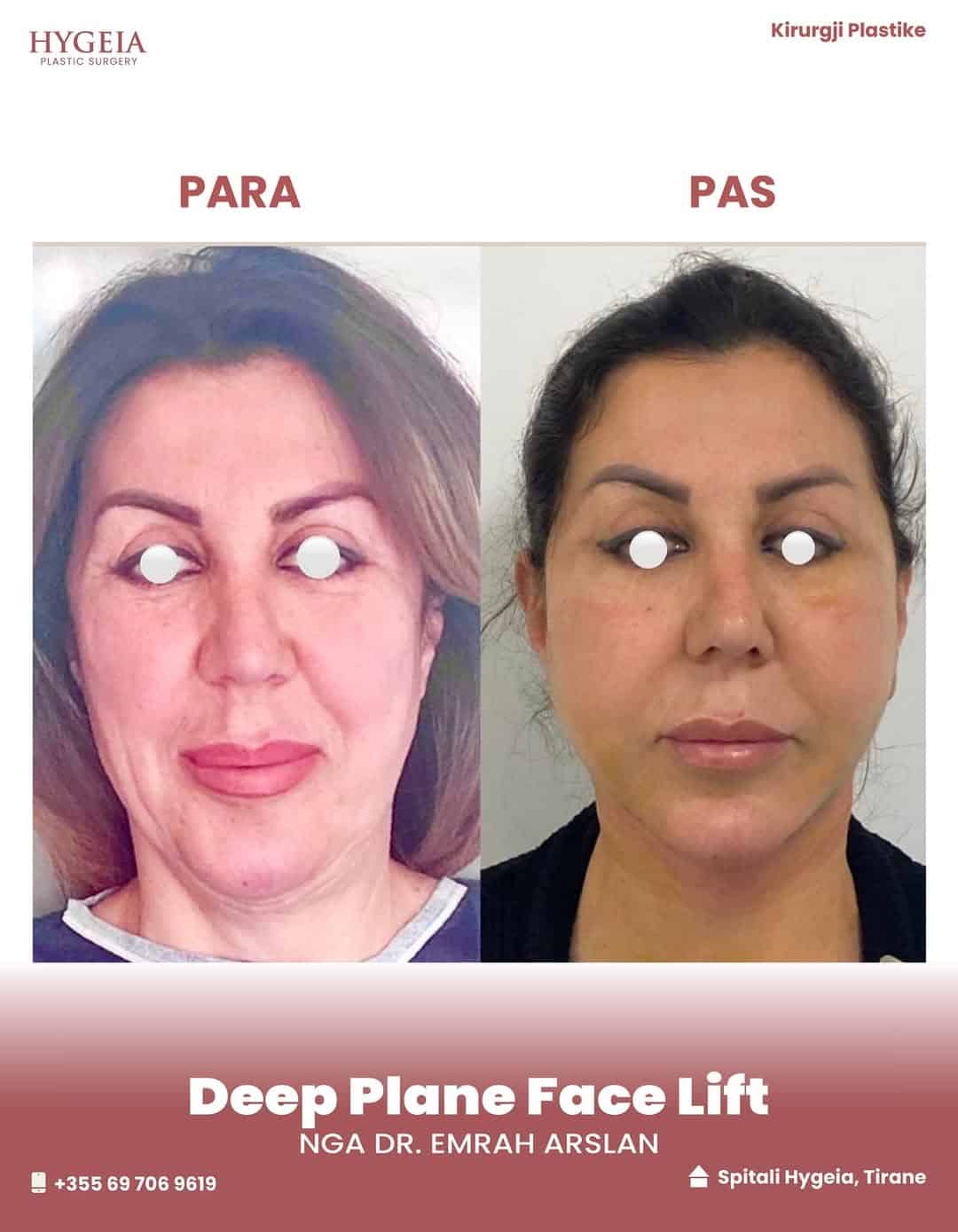
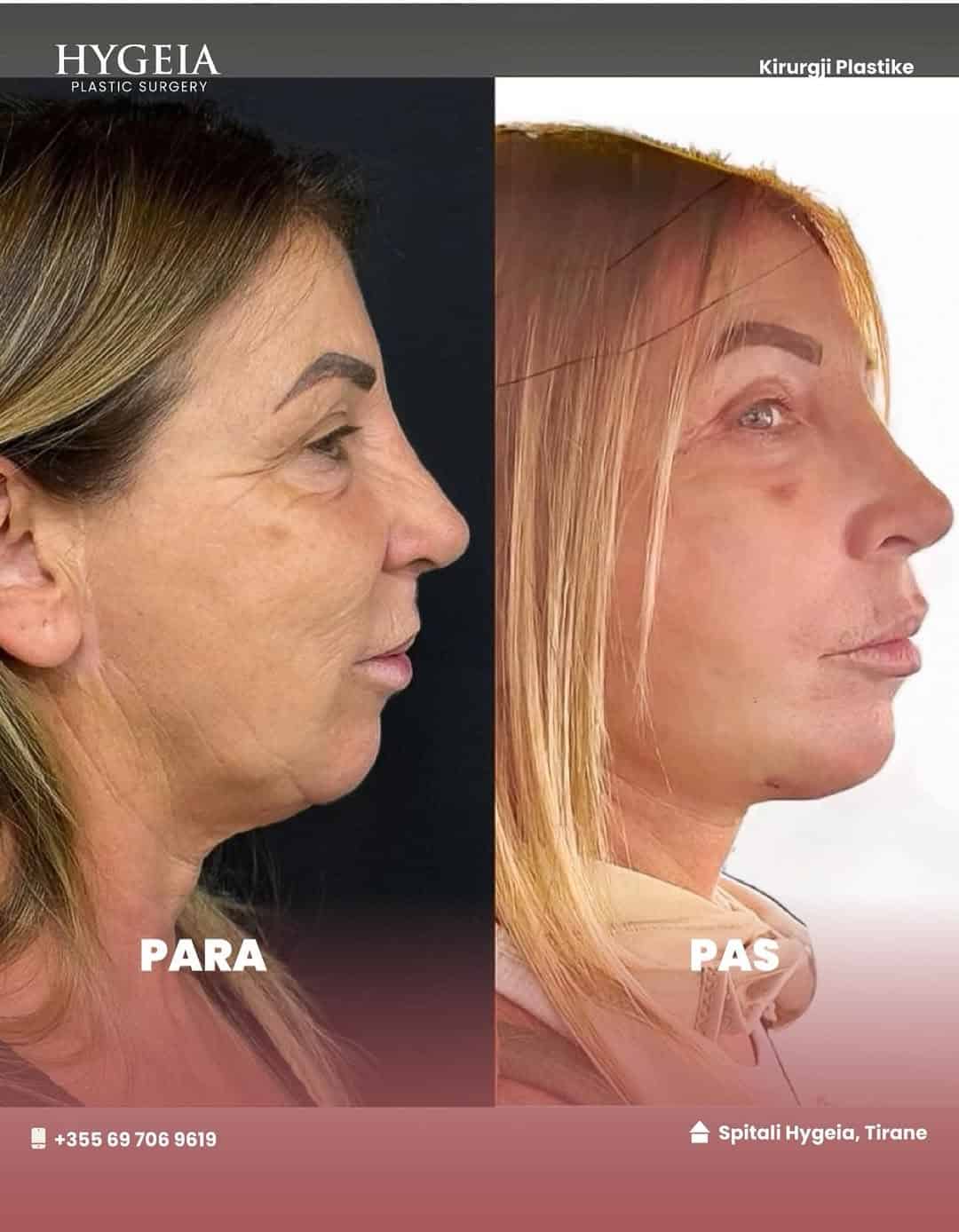
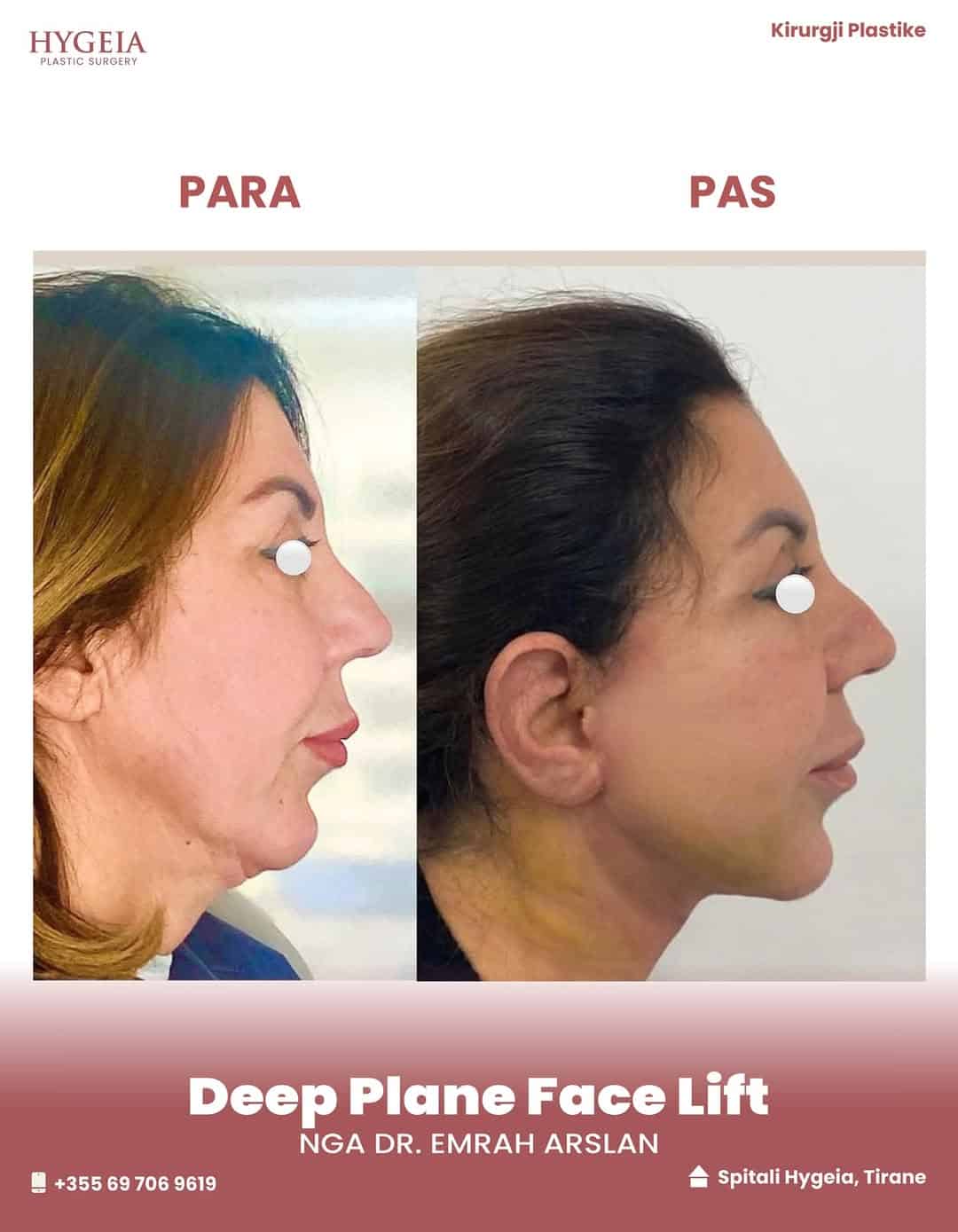
Before & After Deep Plane Facelift Photos

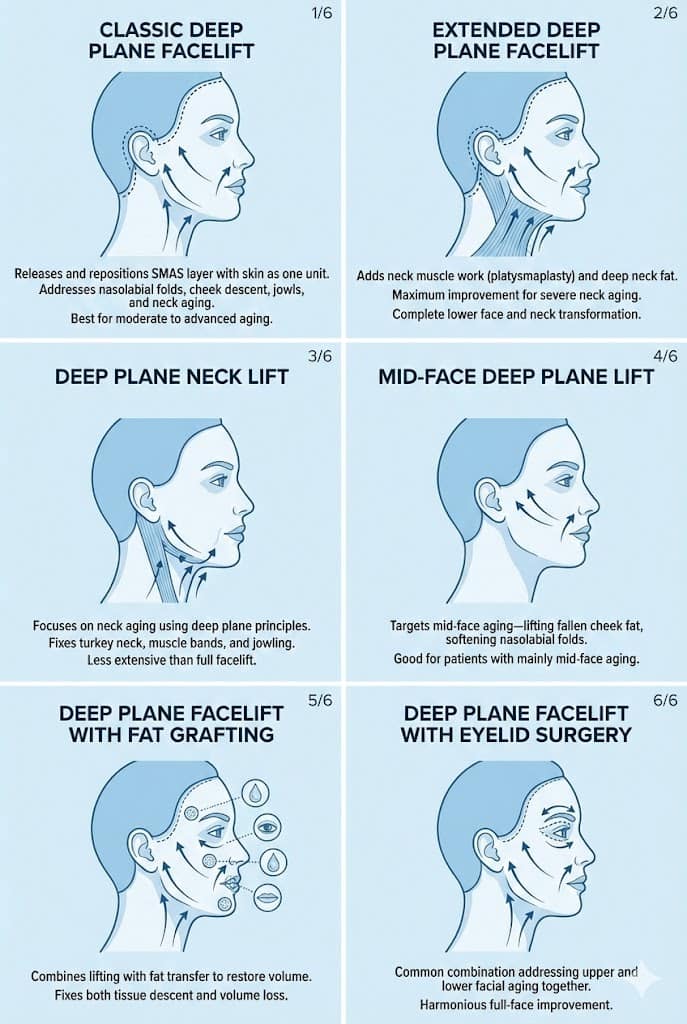
What are the Deep Plane Facelift Options?
Classic Deep Plane Facelift – The full approach, releasing and repositioning the entire SMAS layer with skin as one continuous unit. Addresses nasolabial folds, cheek descent, jowls, and neck aging. Incisions run along the hairline and around ears. Best for moderate to advanced aging with significant tissue descent.
Extended Deep Plane Facelift – Adds neck muscle work (platysmaplasty) and addresses deeper neck fat. Maximum improvement for patients with severe neck aging including muscle bands, platysmal separation, and deep fullness. The most thorough option for complete lower face and neck transformation.
Deep Plane Neck Lift – Focuses on neck aging using deep plane principles while providing some lower face improvement. Fixes turkey neck, muscle bands, and jowling. Less extensive than full facelift but more thorough than simple neck procedures.
Mid-Face Deep Plane Lift – Targets mid-face aging specifically—lifting fallen cheek fat, softening nasolabial folds, restoring cheek projection. Works well for patients showing mainly mid-face aging with less concern about lower face and neck. Can combine with other techniques.
Deep Plane Facelift with Fat Grafting – Combines lifting with fat transfer to temples, under-eyes, cheeks, and lips. Fixes both tissue descent (through lifting) and volume loss (through grafting). Especially good for patients with significant facial deflation along with sagging.
Deep Plane Facelift with Eyelid Surgery – Common combination addressing upper and lower facial aging together. Creates harmonious full-face improvement through one surgery and recovery.

The Best Candidates For Deep Plane Facelift are patients with…
Deep Plane Facelift At a Glance
| Surgery Time | 4-6 hours |
| Anesthesia | General anesthetic |
| Hospital Stay | 1 night |
| Albania Stay | 10-14 days recommended |
| Drains | Removed after 1-3 days |
| Sutures Out | 7-14 days (staged removal) |
| Time Off Work | 2-3 weeks |
| Exercise | Light after 3 weeks, full after 6 weeks |
| Sleeping Position | Head elevated for 2-3 weeks |
| Hair Coloring | After 6 weeks |
| Driving | After 2 weeks |
| Full Recovery | 6-8 weeks |
| Final Results | 6-12 months |
| Results Last | 10-15 years or longer |
The Cost of Deep Plane Facelift in Albania
Deep plane facelift at Hygeia Hospital costs €2,500-7,500 depending on what’s included. This is 55-65% less than Western Europe for the same quality surgery.
Albania pricing:
- Deep plane facelift: €2,500-7,500
- Extended with neck work: €6,500-8,500
- With upper eyelid surgery: €6,800-9,000
- With fat grafting: €7,000-9,500
- Revision cases: €7,500-10,000
Western Europe comparison:
- UK: €15,000-25,000
- Germany: €16,000-26,000
- Switzerland: €18,000-30,000
- Italy: €14,000-23,000
- France: €15,500-24,000
Even with flights (€100-400) and 10-14 nights accommodation (€350-1,120), you save thousands. Price includes everything: surgeon, anesthetist, overnight hospital stay, supplies, compression garment, medications, all follow-up appointments, drain care, suture removal, and 24/7 support.
Our coordinators can arrange hotels near the hospital, airport transfers, and help with your extended stay since this surgery needs longer recovery time in Albania before flying home.
What are the Benefits of Deep Plane Facelift?
More Natural Results – You’re moving actual tissue, not just pulling skin tight. This creates natural contours without that windswept “obviously had work done” look. People think you look rested and younger, not surgical.
Better Mid-Face Improvement – The technique lifts fallen cheek fat and softens those deep lines from nose to mouth better than any other facelift method. Your cheeks look full and youthful again, not hollow or flat.
Lasts Much Longer – Expect 10-15 years or more because you’ve fixed the underlying support structure. Many patients never need another facelift. Traditional methods last 5-7 years.
Less Skin Tension – Since the heavy lifting happens deeper down, there’s less pull on your skin. This means better scar healing and less visible scarring.
Bigger Changes Possible – The technique allows more dramatic improvement for people with significant aging. You’re not limited by skin-only approaches.
Natural Expressions – Your face still moves naturally. You don’t get that frozen or tight look some facelift patients have.
Fixes Multiple Problems – Mid-face sagging, jowls, neck bands, lost jawline—all addressed in one surgery instead of needing separate procedures.
Who is Suitable for Deep Plane Facelift?
Age 45-70 typically, though it depends on how you’ve aged individually. Moderate to significant aging signs—descended cheeks, deep nasolabial folds, jowls, lost jawline, neck sagging. If your aging is mild, simpler techniques might work better. Decent skin quality so it can shrink back smoothly after repositioning deeper tissues. Good bone structure gives you something to work with. Realistic about results—this creates major improvement but doesn’t stop time or make you perfect. Very good health—the surgery takes longer and goes deeper, so your cardiovascular system needs to handle it well. Controlled blood pressure is important. Absolutely no smoking—this is critical. Smoking causes serious complications including skin death, terrible healing, and awful scars. Stop everything with nicotine 4-6 weeks before and after. No cheating. Ready for serious recovery—you’ll have significant swelling and bruising for 2-3 weeks. You won’t be presentable quickly. Stable weight for 6-12 months minimum. Committed to recovery rules—sleeping propped up for weeks, no strenuous activity for 6 weeks, multiple follow-ups, protecting your face.
Best Deep Plane Facelift Surgeons in Albania
Deep plane facelift is genuinely difficult surgery. It’s not something every plastic surgeon does well. The technique requires specialized training beyond standard residency. Surgeons work in deeper, more dangerous planes near facial nerves. One wrong move and you can’t smile properly. Experience matters enormously here.
Training matters – Look for surgeons who specifically trained in deep plane technique, not just general facelifts. They should have done fellowships at centers known for advanced facial surgery. Ask where they trained and with whom.
Volume matters – How many deep plane facelifts does the surgeon do yearly? Someone doing 50+ has vastly more experience than someone doing 5. This isn’t a procedure you want from someone who does it occasionally.
Results matter – Study before-and-after photos carefully. Look for natural results without pulled appearance. Check mid-face improvement specifically—can they actually lift cheeks? Do nasolabial folds soften significantly? Are scars well-hidden?
Complications happen – Ask what goes wrong sometimes and how they handle it. Good surgeons are honest about risks and have plans for managing problems. Run from anyone who claims perfect results every time.
At Hygeia, our facelift surgeons completed additional training in deep plane technique at European centers specializing in facial surgery. They perform these procedures regularly, not occasionally. But you should still ask the same tough questions and review their specific work before deciding.
What to Expect: Your Deep Plane Facelift Journey
Initial Consultation
Your surgeon examines your face from multiple angles, assessing tissue descent, skin quality, bone structure, and aging patterns. You discuss specific concerns—what bothers you most about your appearance. The surgeon explains what deep plane technique can and can’t fix, shows photos of similar cases, and discusses realistic outcomes. Computer imaging may help visualize potential results, though it’s not a guarantee.
For international patients, video consultations work well for initial assessment. Good photos from multiple angles allow accurate evaluation. Coordinators then help arrange surgery timing, accommodation for your 10-14 day stay, and all logistics.
Pre-Surgery Preparation
Stop blood-thinning medications and supplements weeks before surgery—aspirin, ibuprofen, fish oil, vitamin E, many herbal supplements. Stop ALL nicotine 4-6 weeks before. Get medical clearance if you have health conditions. Arrange help at home for the first week when you need assistance. Stock soft foods since chewing feels uncomfortable initially.
Surgery Day
You’ll spend the night in hospital. Surgery takes 4-6 hours under general anesthesia. The surgeon makes incisions along your hairline and around your ears, releases the deep plane layer, repositions everything upward and backward, removes excess skin, and closes carefully. Small drains may be placed to prevent fluid buildup.
You wake up with bandages, compression garment, and drains. You’ll feel tight, swollen, and pretty uncomfortable—not unbearable, but significant. The first night nurses monitor you closely.
Recovery Timeline
Days 1-3: Pretty rough honestly. Significant swelling, bruising, tightness. You look worse than you will later—this is normal. Drains removed day 1-3. Pain medication helps but you’ll be uncomfortable. Sleep propped up. No bending over.
Days 4-7: Improving but still swollen and bruised. Some sutures removed around day 7. You’re mobile but tired. Still not presentable for public. Continue sleeping elevated.
Weeks 2-3: Major swelling decreasing. More sutures out around day 10-14. You’re starting to see improvement but still obviously had surgery. Most people return to work around week 3 if they can tolerate others seeing some residual swelling and bruising.
Weeks 4-6: Looking much better. Swelling continues dropping. Can resume light exercise week 3, more normal activity week 6. Scars still pink but improving.
Months 3-6: Real improvement emerging. Swelling mostly gone. Scars fading. You’re seeing what you’ll actually look like.
Months 6-12: Final refinement. Last traces of deep swelling resolve. Scars mature. True final result visible around 12 months.
Meet the team
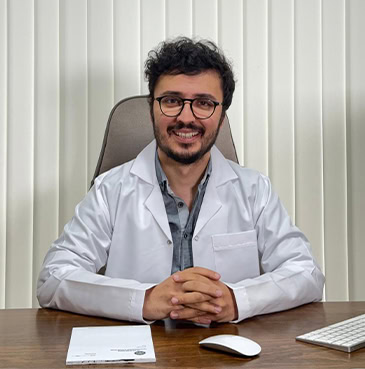
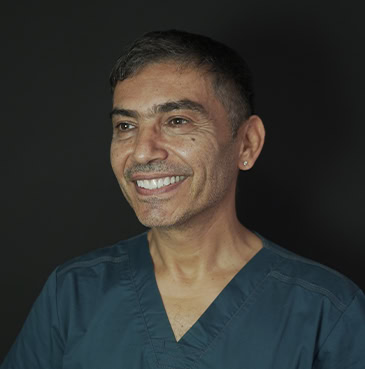

Facial Surgery